
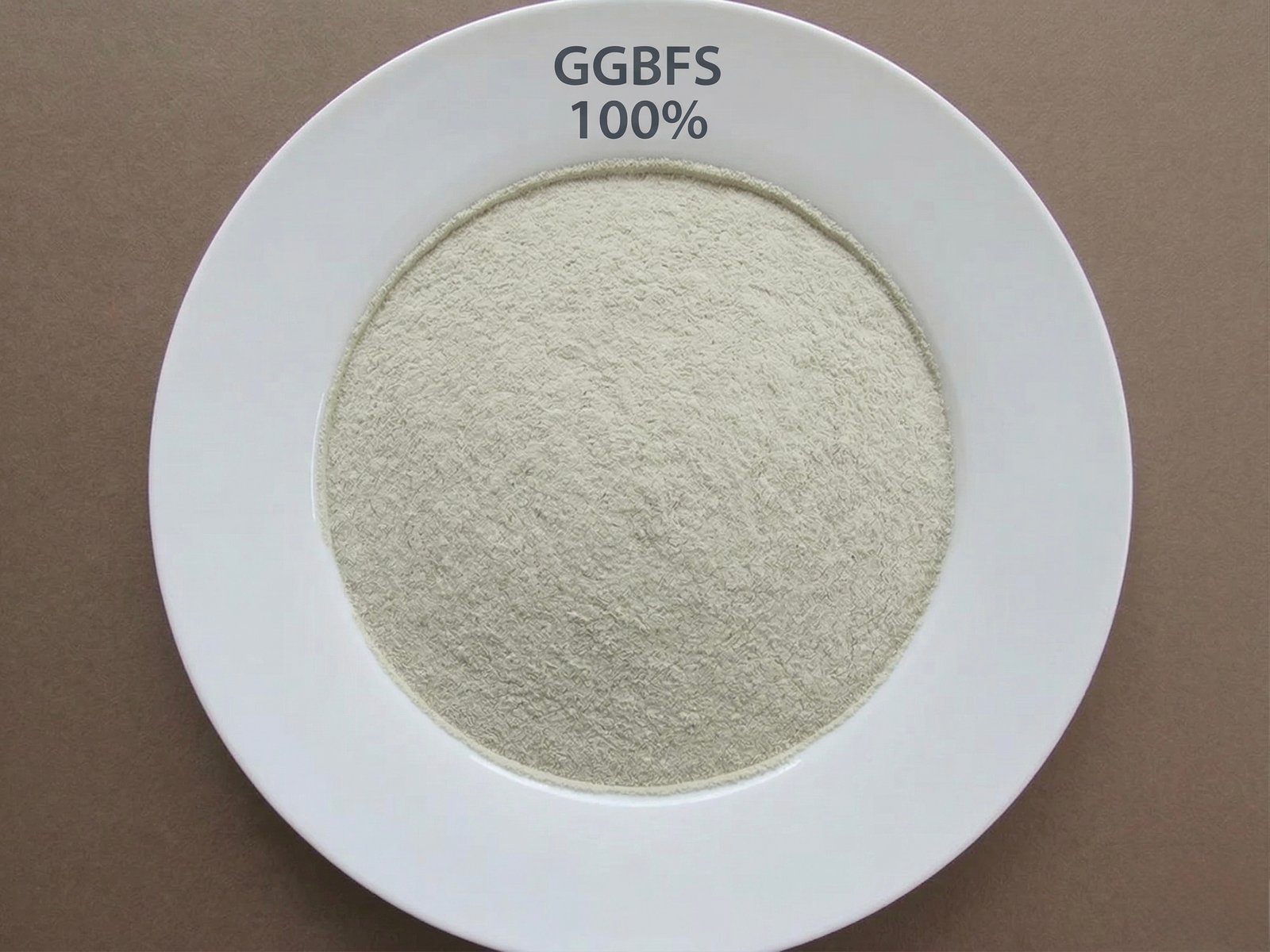
 GGBFS
GGBFS
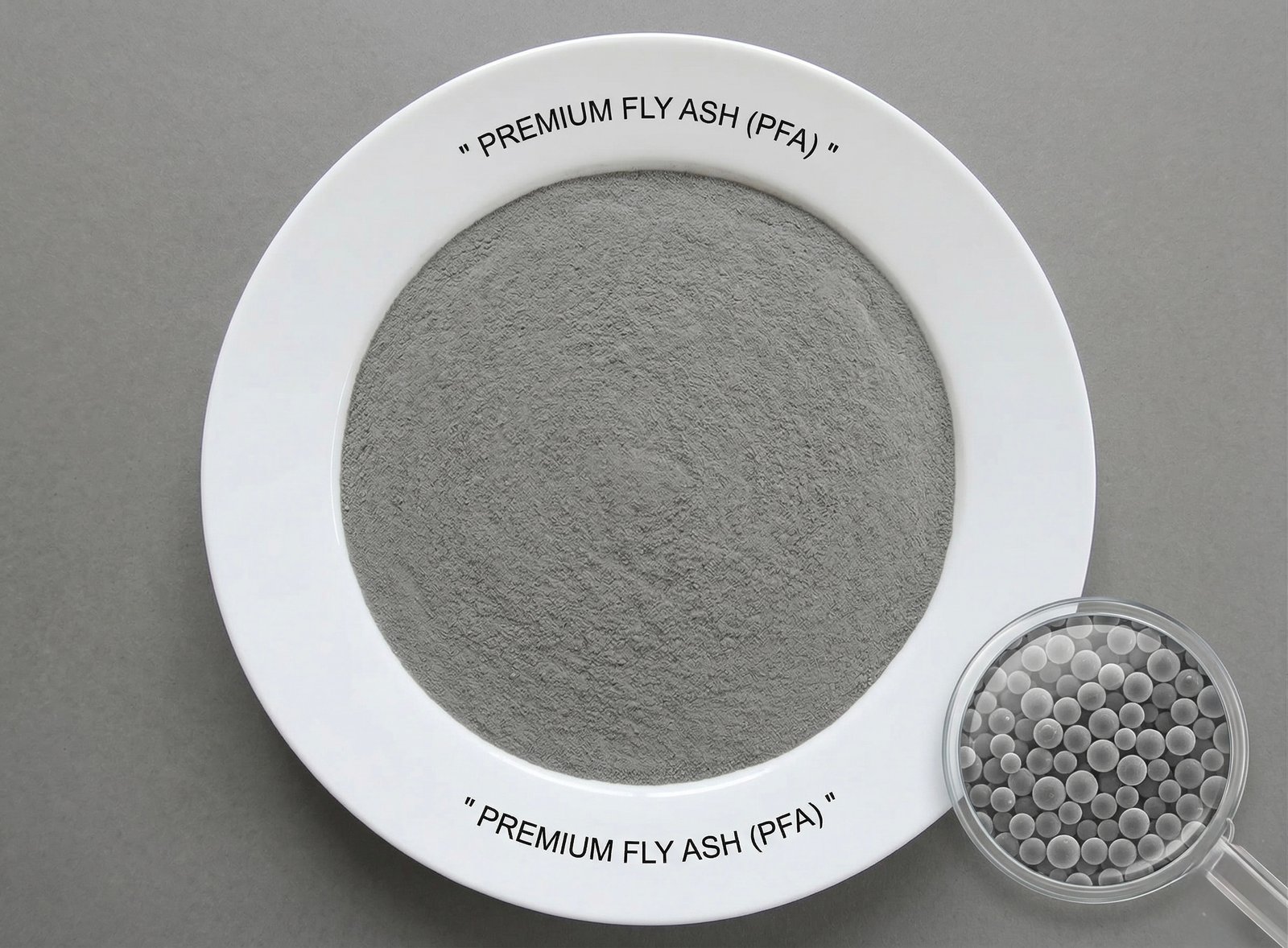 Fly Ash
GGBFS vs Fly Ash: Performance, Cost and Use in Concrete
← Back to ResourcesCompare GGBFS and fly ash for concrete strength, heat, durability, consistency, standards and sourcing. See which SCM best fits your mix design.
Quick Answer: GGBFS and Fly Ash Are Different SCMs
GGBFS is a latent hydraulic material made from granulated iron blast-furnace slag. Fly ash is a combustion by-product that normally acts as a pozzolan, although higher-calcium Class C fly ash may also have cementitious behavior. Both can improve long-term concrete performance and reduce Portland cement demand, but they differ in chemistry, standards, color, consistency and strength development.
The best choice depends on the required early and later strength, heat control, exposure class, finish color, local availability and delivered cost. Neither material should be selected from price per ton alone; compare the approved replacement level and performance of the complete mix.
What Is GGBFS?
Ground granulated blast furnace slag is produced by rapidly cooling molten blast-furnace slag to form a glassy granulate, then drying and grinding it to a controlled fineness. In the presence of water and an activator such as Portland cement, GGBFS hydrates and contributes cementitious products.
Specifications describe performance through chemistry, fineness and activity. ASTM C989 classifies slag cement by activity grade, while EN 15167 and GB/T 18046 use their own requirements and grade conventions. S75, S95 and S105 are common export descriptions under the Chinese standard, but a buyer should never assume those labels are directly equivalent to ASTM grades.
GGBFS is used in ready-mix, precast, mass, marine and sulfate-exposed concrete. Its effect varies with fineness, glass content, cement chemistry, replacement level, curing and temperature.
What Is Fly Ash?
Fly ash is collected from flue gases at coal-fired power plants. Its composition depends on the coal source and combustion process, so quality can vary significantly between sources and production periods.
Under ASTM C618, fly ash is commonly discussed as Class F or Class C. Class F is generally lower in calcium and primarily pozzolanic. Class C is higher in calcium and can show both pozzolanic and cementitious behavior. EN 450-1 uses a different classification system for fly ash in concrete, so orders should state the exact standard rather than only a class name.
Important quality indicators include loss on ignition, fineness, moisture, strength activity, sulfur compounds and consistency between batches. Read the Class C vs Class F fly ash guide for a deeper grade comparison.
GGBFS vs Fly Ash: Side-by-Side Comparison
| Selection Factor | GGBFS | Fly Ash |
|---|---|---|
| Industrial source | Granulated by-product of iron blast-furnace production. | Fine particles collected from coal combustion flue gas. |
| Reaction type | Latent hydraulic; reacts when activated in the cementitious system. | Primarily pozzolanic; Class C may also have cementitious behavior. |
| Common standards | ASTM C989, EN 15167, GB/T 18046. | ASTM C618, EN 450-1 and project specifications. |
| Common grade language | ASTM Grade 80/100/120 or S75/S95/S105 under GB/T conventions. | ASTM Class F or Class C; EN categories use different criteria. |
| Early strength | Depends on grade and temperature; high-reactivity grades can develop strength faster than many Class F ashes. | Class F often slows early strength; Class C behavior varies with chemistry. |
| Later-age strength | Can support strong later-age development with adequate curing. | Can provide substantial later-age gains when the source is suitable and curing is adequate. |
| Workability | Can improve finishability and cohesion; response depends on fineness and mix design. | Spherical particles often improve workability and may reduce water demand. |
| Heat development | Often used to reduce heat in mass concrete; effect depends on fineness and proportion. | Often reduces heat, especially lower-calcium fly ash; effect depends on class and dosage. |
| Color | Usually light grey to off-white and can lighten concrete. | Often grey to dark grey; carbon and iron content influence color. |
| Supply consistency | Requires control of activity, fineness and glass-related performance. | Requires close attention to source variability, LOI, fineness and moisture. |
How GGBFS and Fly Ash Affect Concrete Performance
Early and later strength
Both materials can slow early strength under some conditions, especially at high replacement levels or low curing temperatures. High-reactivity GGBFS often develops strength earlier than Class F fly ash, but a general rule cannot replace a trial mix. Cement composition, fineness, water-binder ratio, curing and chemical admixtures can change the result.
At later ages, both can contribute to continued strength development and a denser cement paste when properly proportioned and cured. The project schedule should therefore distinguish stripping strength, 7-day strength, 28-day strength and later-age targets.
Heat of hydration
GGBFS and fly ash are both used in mass concrete to manage temperature rise. The degree of heat reduction depends on the material chemistry, fineness, replacement level and Portland cement. Lower-calcium fly ash commonly provides strong heat reduction, while slag performance changes with grade and dosage.
Durability and permeability
Well-designed GGBFS or fly ash concrete can reduce permeability and improve resistance to selected aggressive exposures. Performance is application-specific: sulfate resistance, chloride penetration, alkali-silica reaction and freeze-thaw requirements should be evaluated against the governing exposure class and test method.
Workability and finishing
Fly ash's spherical particles often improve flow and pumping. GGBFS can improve cohesion and finishability. Air entrainment, set time and admixture demand may change, so the ready-mix producer should qualify the complete combination of cement, SCMs, aggregates and admixtures.
Cost and Supply: Compare Landed Performance, Not Only Price per Ton
A lower FOB price does not automatically produce a lower concrete cost. Delivered value depends on the approved replacement level, required cement content, packing efficiency, container payload, freight, storage, handling losses and consistency. A material that needs a lower replacement level may still be more economical than a cheaper tonnage price, and the reverse can also be true.
For import comparisons, request quotes on the same Incoterm, destination, packing and shipment size. Review the GGBFS price guide and fly ash price guide before comparing offers.
Supply note: Ask whether the quoted batch comes from a stable production source and whether subsequent shipments will use the same source. A one-time COA is not enough for a long-term supply program.
How to Choose Between GGBFS and Fly Ash
- Consider GGBFS when the project values light color, strong later-age performance, marine or sulfate-exposure design, or a stable slag cement program.
- Consider Class F fly ash when workability, heat reduction and later-age performance are priorities and a consistent low-LOI source is available.
- Consider Class C fly ash only after confirming chemistry and project acceptance, because performance can differ materially between sources.
- Consider a ternary blend when GGBFS and fly ash together can balance fresh properties, heat, strength timing and durability.
- Use trials and specifications to make the final decision. No comparison article can replace project mix validation.
Buyer Checklist for GGBFS and Fly Ash
- Name the exact standard, grade or class and the intended concrete application.
- For GGBFS, review activity index, fineness, moisture, glass-related performance and chemical limits.
- For fly ash, review class, LOI, fineness, moisture, strength activity and source consistency.
- Request current TDS, batch COA or mill certificate, MSDS and representative samples.
- Confirm whether project approval requires third-party testing or plant certification.
- Run trial mixes with the actual cement and admixtures at expected curing temperatures.
- Compare landed cost using the approved replacement level and container payload.
For independent technical context, the FHWA guide to supplementary cementitious materials describes fly ash, slag cement and silica fume as common SCMs, while the FHWA pavement materials guidance explains why mix-specific performance should be verified.
Frequently Asked Questions
Is GGBFS the same as fly ash?
No. GGBFS is a finely ground, granulated by-product of ironmaking and behaves as a latent hydraulic material. Fly ash is collected from coal combustion and is primarily pozzolanic, although higher-calcium Class C fly ash can also show cementitious behavior.
Which gives higher early strength: GGBFS or fly ash?
The answer depends on grade, fineness, replacement level, cement chemistry, curing temperature and admixtures. In many mixes, high-reactivity GGBFS develops strength earlier than Class F fly ash, but laboratory trials are required for a reliable project decision.
Can GGBFS and fly ash be used together?
Yes. Ternary concrete can combine Portland cement, GGBFS and fly ash to balance workability, heat development, later-age strength and durability. Proportions should be validated through trial mixes and the applicable project specification.
Which standards apply to GGBFS and fly ash?
ASTM C989 is commonly used for slag cement or GGBFS, while ASTM C618 covers coal fly ash and natural pozzolans. EN 15167 and EN 450-1 are common European references. Always confirm the standard named in the contract.
Is GGBFS cheaper than fly ash?
There is no universal answer. Delivered cost depends on grade, regional availability, packing, container loading, ocean freight and local supply. Compare materials on landed cost and required dosage, not only the FOB price per ton.
Compare the right grade before you buy
Send Miningsun your application, required standard, quantity and destination port. We can provide product options, technical documents, samples and FOB or CIF quotations.
Pingback: GGBFS Grades: S75, S95 & S105 (ASTM C989 Grade 80/100/120) Explained - Miningsun