
Vermiculite for Fireproofing and Insulation: Grade and Sourcing Guide
← Back to ResourcesExpanded vermiculite combines low bulk density with useful thermal and fire-protection properties. The best grade depends on the finished system: spray-applied fireproofing, boards, plasters, loose-fill insulation and refractory mixes require different particle sizes, densities and formulation tests.
Quick Answer
Buy vermiculite as a system input, not as a generic lightweight mineral. Define particle-size distribution, bulk-density range, moisture, oversize and packaging compression, then qualify the finished fireproofing or insulation product to the required local test method.
Core Specifications to Put on the Purchase Order
A product name is not a complete specification. Use measurable limits and identify the test method so the supplier, inspection company and receiving laboratory evaluate the same requirements.
| Item | What to Define | Why It Matters |
|---|---|---|
| Particle-size distribution | Fine, medium, coarse or project limits | Affects mix texture, sprayability, board structure and coverage. |
| Loose bulk density | Agreed range and test method | Drives yield, handling, insulation and freight economics. |
| Moisture | Maximum shipment value | Affects storage, weight, blending and bag stability. |
| Oversize / fines | Buyer-defined limits | Controls surface finish and production consistency. |
| Mineral and safety review | SDS plus source-control information | Supports safe handling and buyer quality programs. |
Match Particle Size to the Finished System
Vermiculite grade names vary by producer, so specify a measurable size distribution and bulk-density range. A sample that looks acceptable may still change pumpability, yield or board strength if the distribution shifts in commercial production.
| Option | Typical Position | Buyer Check |
|---|---|---|
| Fine grade | Often selected for smooth plasters, coatings, boards and fine refractory shapes. | Check water demand, binder ratio, surface finish and dust. |
| Medium grade | Balanced option for many spray-applied fireproofing and insulation mixes. | Validate pumpability, rebound, density and cured adhesion. |
| Coarse grade | Used where low density, void filling or larger aggregate structure is preferred. | Check segregation, compaction, coverage and packaging damage. |
Application and Performance Notes
Exfoliated vermiculite is used in building boards, fire-resistant plasters and spray-applied protection because it is lightweight and insulating. In a fire-protection product, the binder, substrate, applied thickness, density and installation quality work together; raw vermiculite alone does not establish a fire rating.
For loose-fill insulation, grade and treatment influence flow into cavities, settlement and moisture behavior. For refractory or high-temperature shapes, the mineral is combined with a suitable binder and other aggregates, then tested for dimensional stability and service conditions.
Always distinguish supplier mineral data from finished-system certification. Request the product-system fire or thermal test reports required in the destination market and run production trials before approving a new vermiculite source.
Qualification rule: Approve a representative sample and the supplier's recent batch data, then define the same acceptance limits in the purchase contract. Product data does not replace testing in the buyer's finished formulation.
Quality Documents to Request
Documents should be recent, traceable to the offered grade and consistent with the standard named in the contract.
- Technical Data Sheet (TDS)
- Particle-size distribution
- Loose bulk-density report
- Moisture result
- Safety Data Sheet
- Source-control and finished-system test documents where applicable
Packaging, Loading and Shipping
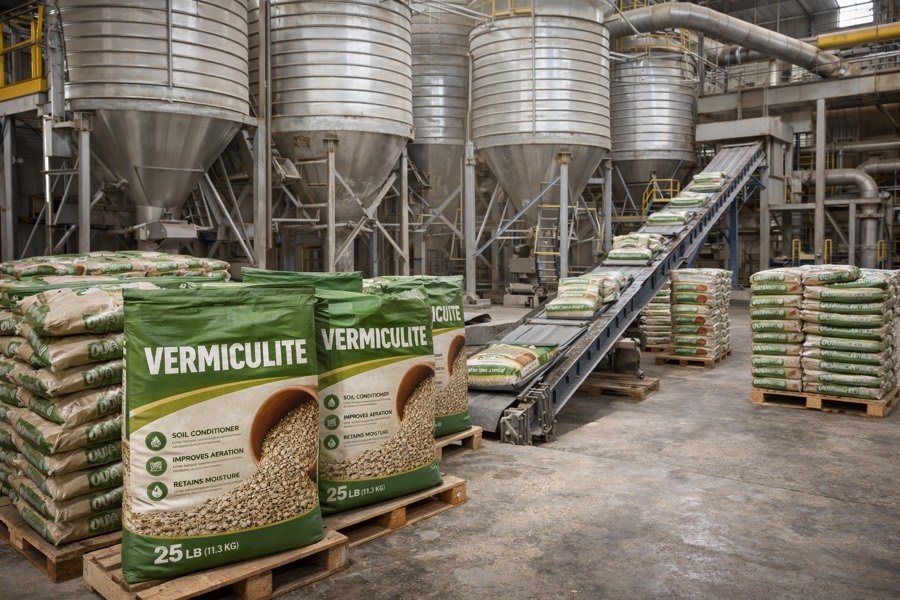
Vermiculite freight is strongly affected by volume. It may ship in compressed bags, jumbo bags or palletized retail packs. Confirm the compression ratio, recovery after opening, bag dimensions, container quantity and acceptable particle breakdown before comparing prices.
Before issuing the order, confirm bag marking, net weight, container loading estimate, production lead time, loading port and responsibility under the selected Incoterm. Ask whether the quoted payload is guaranteed or only an estimate.
Procurement Checklist
- State the application and governing standard.
- Define measurable chemistry, physical and performance limits.
- Review the TDS, recent COA and relevant test reports.
- Approve a representative sample in the intended formulation.
- Confirm packaging, lot marking, payload and moisture protection.
- Compare quotations on the same Incoterm and landed-cost basis.
- Agree pre-shipment inspection and rejection terms for the first order.
Frequently Asked Questions
Which vermiculite grade is best for fireproofing?
It depends on the approved formulation and application method. Fine and medium expanded grades are common, but particle size, bulk density, binder demand and spray performance must be tested together.
Does vermiculite itself provide a certified fire rating?
No. Fire ratings apply to tested systems with defined materials, thickness, substrate and installation conditions. The raw aggregate is only one component.
Why is bulk density important?
Bulk density affects yield, insulation behavior, handling and freight. Buyers should agree both the range and the test method because compaction can change the measured result.
Can compressed vermiculite recover after shipping?
Properly packed expanded vermiculite can recover much of its volume, but excessive compression and rough handling may increase particle breakdown. Test the proposed pack before a full order.
What should be checked in a first shipment?
Verify size distribution, bulk density, moisture, bag recovery and contamination, then run a finished-product trial before approving repeat supply.