
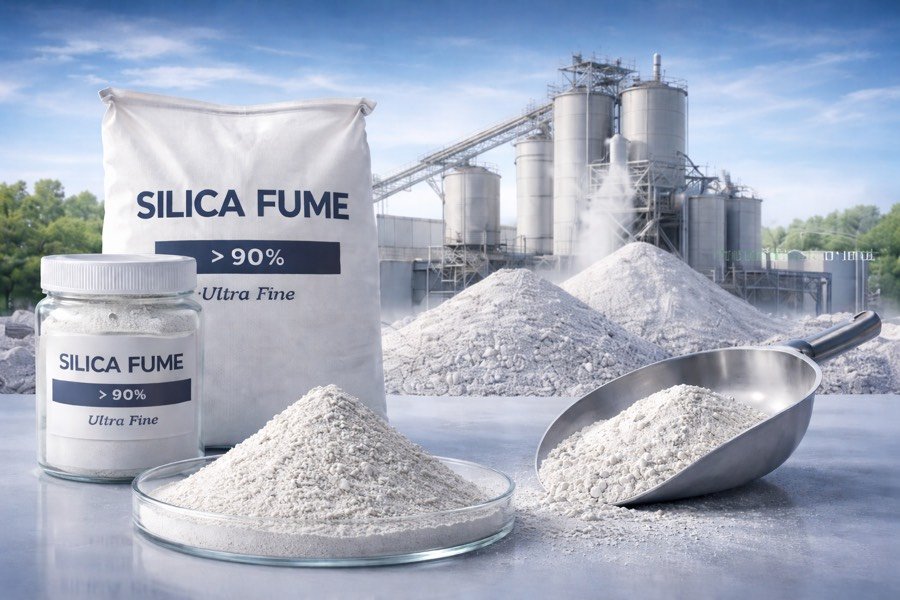
How to Import Silica Fume from China: MOQ, Incoterms, Packaging & Documents
Back to ResourcesChina is the world's largest source of silica fume (microsilica), a by-product of its silicon metal and ferrosilicon industries. For concrete producers, precast manufacturers and refractory plants outside China, importing directly can mean better pricing and consistent supply — but only if you understand how the process works.
Before you import silica fume
Densified versus undensified changes freight economics. Undensified material is approximately 200–350 kg/m³; densified material is approximately 500–700 kg/m³. A container reaches its volume limit earlier with undensified silica fume, so choose the form before comparing landed price and require bulk density on the COA.
- International HS heading
- HS 2811.22 — silicon dioxide (amorphous microsilica). Confirm the destination country’s full 8–10 digit code and duty treatment with the customs broker.
- Put this on the PO
- Specify ASTM C1240 / EN 13263 / GB/T 18736, SiO2 grade, densified or undensified form, activity index, LOI, moisture and oversize.
- COA and inspection
- Ask for the current batch COA before ordering. Miningsun can arrange independent SGS/BV pre-shipment verification; no external laboratory accreditation is implied unless the specific report names it.
This guide walks through the practical steps, from first inquiry to customs clearance, so your first order goes smoothly.
Step 1: Define Your Technical Requirements
Before contacting suppliers, pin down exactly what you need. The clearer your specification, the more accurate and comparable the quotes you'll receive. At minimum, decide on:
- Standard: ASTM C1240, EN 13263 or GB/T 18736
- Grade: Grade 85, 90 or 92 (Grade 90 suits most concrete; Grade 92 for UHPC and demanding marine work)
- Form: densified (easier to handle and ship) or undensified (higher reactivity)
Ask the supplier for a Technical Data Sheet (TDS) and a sample Certificate of Analysis (COA) so your lab can confirm the material meets your mix design before you commit.
Step 2: Understand MOQ and Packaging
Minimum order quantities vary by supplier and packaging. A common arrangement is a 1 metric ton minimum for bagged orders, typically shipped as a full container load, with trial orders of a few tons available for new buyers running qualification tests. Bulk vessel loading has a much higher minimum.
Packaging affects both handling and cost: 25 kg bags suit smaller operations and manual handling, 1-tonne FIBC jumbo bags are the most economical for most buyers, and bulk loading is cheapest per ton at large volume. Choose based on your discharge facilities and how the material will be used on site.
Step 3: Choose Your Incoterms
Incoterms define where the supplier's responsibility ends and yours begins. The three most common for this trade are:
- FOB (Free On Board): the supplier delivers the goods loaded at the Chinese port; you arrange and pay for ocean freight, insurance and import.
- CFR (Cost and Freight): the supplier pays freight to your destination port; insurance is yours.
- CIF (Cost, Insurance and Freight): the supplier covers freight and insurance to your port.
When comparing quotes, make sure you compare the same Incoterm — an FOB price from one supplier against a CIF price from another is not a like-for-like comparison until freight and insurance are added.
Step 4: Agree Payment Terms
Typical terms for this trade are a T/T deposit (commonly 30%) with the balance against a copy of the Bill of Lading, or a Letter of Credit at sight for larger orders. Established, repeat buyers can often negotiate more flexible terms. Agree these in writing in the proforma invoice before production starts.
Step 5: Know the Export Documents You'll Need
A complete document set is what keeps your shipment moving through customs. For silica fume imports you should expect:
- Commercial Invoice and Packing List
- Bill of Lading (B/L)
- Certificate of Origin (CO — often Form A or FORM E depending on your country's trade agreement with China)
- Mill Test Certificate (MTC) and batch-specific COA
- Material Safety Data Sheet (MSDS)
- Fumigation certificate, where required by the destination country
Step 6: Arrange Inspection (Recommended for First Orders)
For a first order with a new supplier, third-party inspection before loading is a low-cost way to protect yourself. SGS, BV or CIQ can verify quantity, packaging, marking and sampling at the loading port. A reputable supplier will welcome buyer-appointed inspection.
Frequently Asked Questions
What is the minimum order to import silica fume from China?
For bagged material, 1 metric ton is a common minimum, usually shipped within a full container load. Trial orders of a few tons are often available for qualification. Bulk vessel loading requires a much larger minimum.
Which Incoterm is best for a first-time buyer?
CIF is often easiest for new importers because the supplier arranges freight and insurance to your port. As you gain experience and freight relationships, FOB can give you more control and sometimes lower total cost.
What documents do I need to clear silica fume at customs?
Typically a commercial invoice, packing list, Bill of Lading, certificate of origin, mill test certificate/COA and MSDS — plus any country-specific certificates. Confirm requirements with your customs broker and verify the correct HS code.
How long does delivery take?
Production lead time for stock grades is often around 15–25 days after order confirmation, plus ocean transit time, which depends on your destination port.
Can I test the material before placing a full order?
Yes. Reputable suppliers provide small samples (commonly 1–2 kg) with a COA for laboratory qualification, and accept small trial orders before you scale up.