Technical Guide

Vermiculite Grades Explained: A Buyer’s Guide | Miningsun

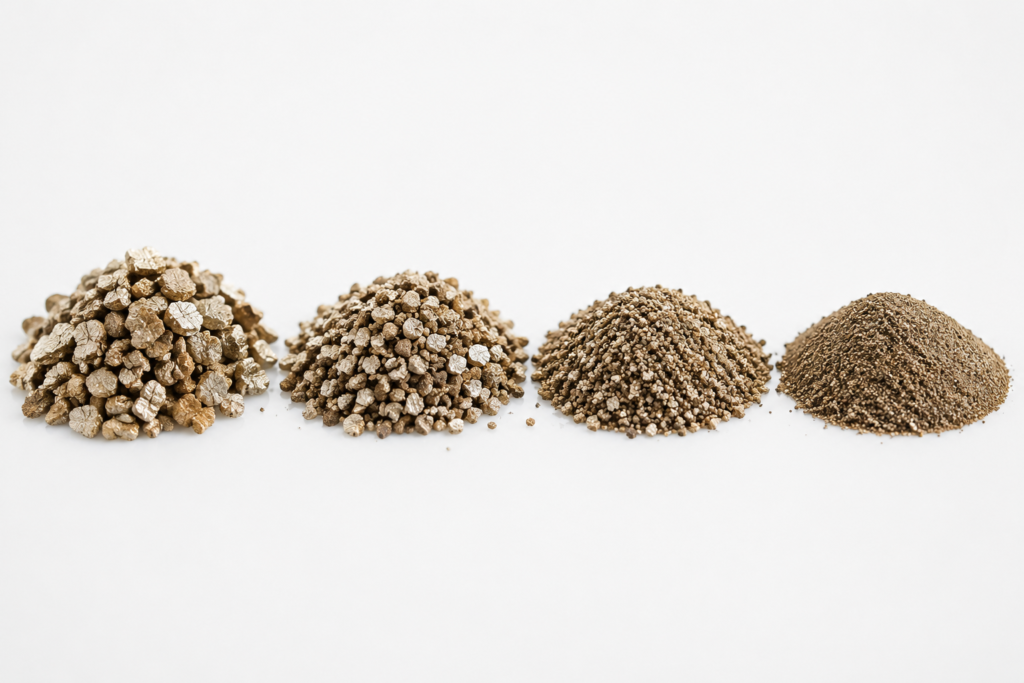
Exfoliated vermiculite is sold in four standard grades defined by particle size, and selecting the wrong grade for an application produces poor results regardless of quality. Grade 1 (0.5–2 mm) and Grade 2 (2–4 mm) are the horticultural grades used in seed germination, propagation mixes, potting media, and hydroponics substrates. Grade 3 (4–8 mm) is the primary construction grade for loose-fill cavity insulation, lightweight concrete, and passive fire protection of structural steel. Grade 4 (8–12 mm) is used in high-temperature applications including steel ladle topping, refractory insulation, and foundry riser sleeves. All grades are asbestos-free certified. This guide covers properties, application requirements, and a procurement checklist for international buyers.

Vermiculite Grades Explained: A Buyer’s Guide | Miningsun Read More »

Bentonite in Drilling Fluids: Grade Selection Guide | Miningsun

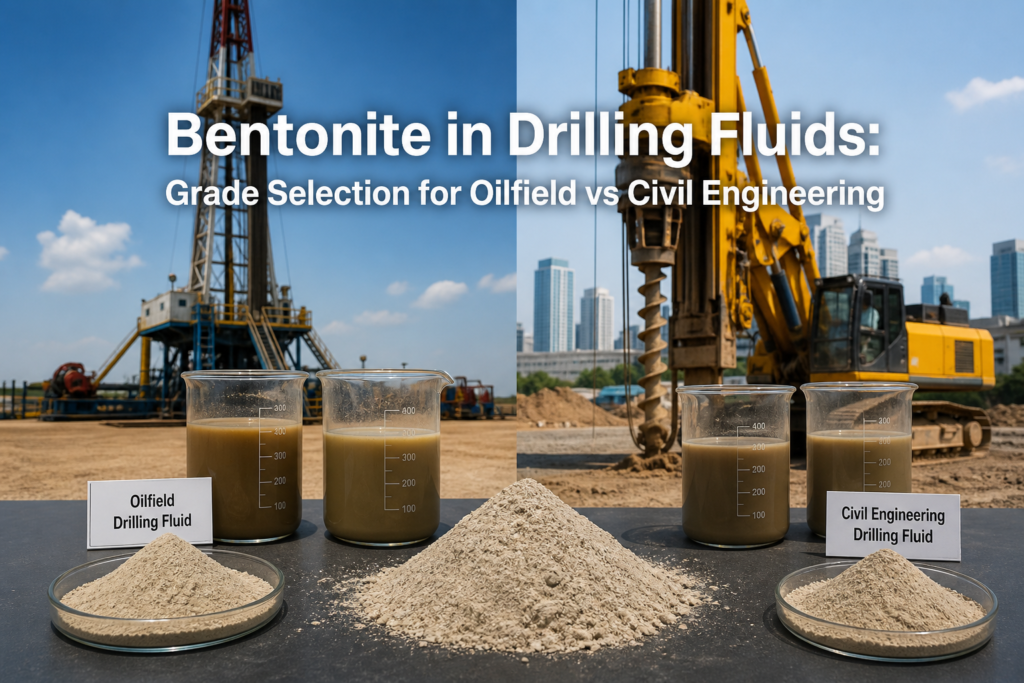
Selecting the right bentonite grade for a drilling application directly determines fluid viscosity, filtration control, and borehole stability. API 13A grade bentonite — with a minimum yield of 16 m³/tonne — is the mandatory specification for oil, gas, and geothermal wells and demanding HDD crossings. OCMA grade, with a minimum yield of 13 m³/tonne, is suitable for standard civil HDD, water well drilling, and geotechnical boreholes at a 15–25% cost saving. This guide covers the API vs OCMA comparison in detail, application-by-application grade selection for oilfield, HDD, tunneling, and water well drilling, mixing and hydration requirements, and a full procurement checklist for international buyers.

Bentonite in Drilling Fluids: Grade Selection Guide | Miningsun Read More »

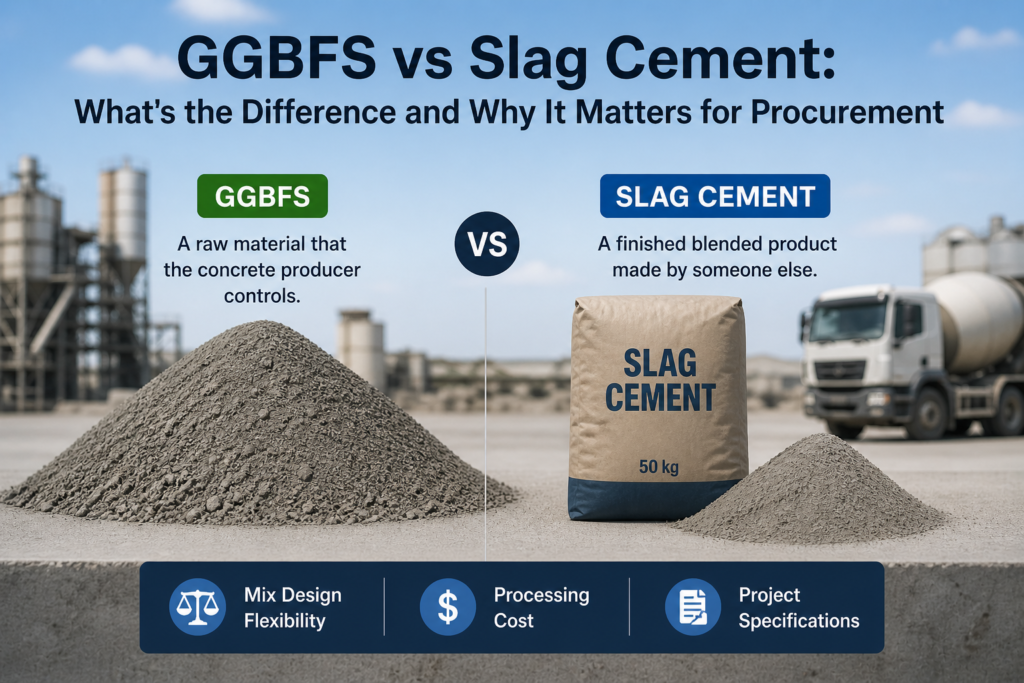
GGBFS vs slag cement

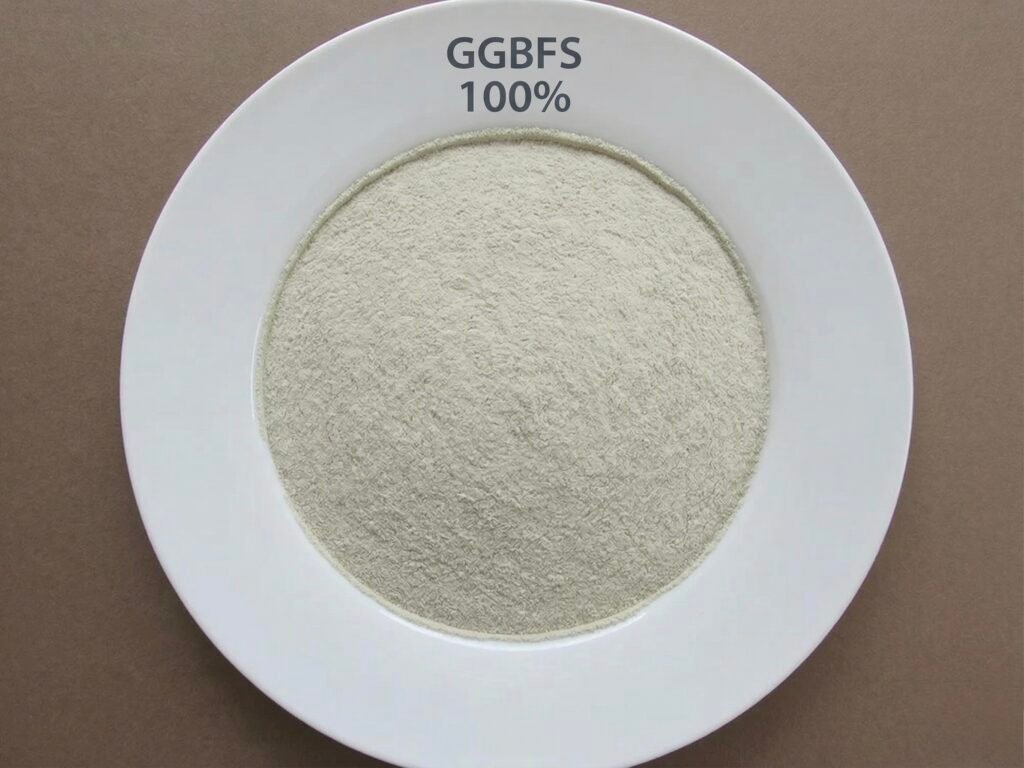
GGBFS and slag cement are frequently confused but they are different products governed by different standards. GGBFS is a pure unblended supplementary cementitious material covered by ASTM C989 and EN 15167, giving the concrete producer full control over replacement rate. Slag cement is a finished blended product — Portland clinker plus GGBFS — governed by ASTM C595 or EN 197-1, with a fixed ratio set by the manufacturer. This guide explains the distinction, covers S95 and S105 grade specifications, typical dosage ranges from 30% to 70% replacement, and provides a procurement checklist for international buyers sourcing GGBFS from China or Korea.

GGBFS vs slag cement Read More »

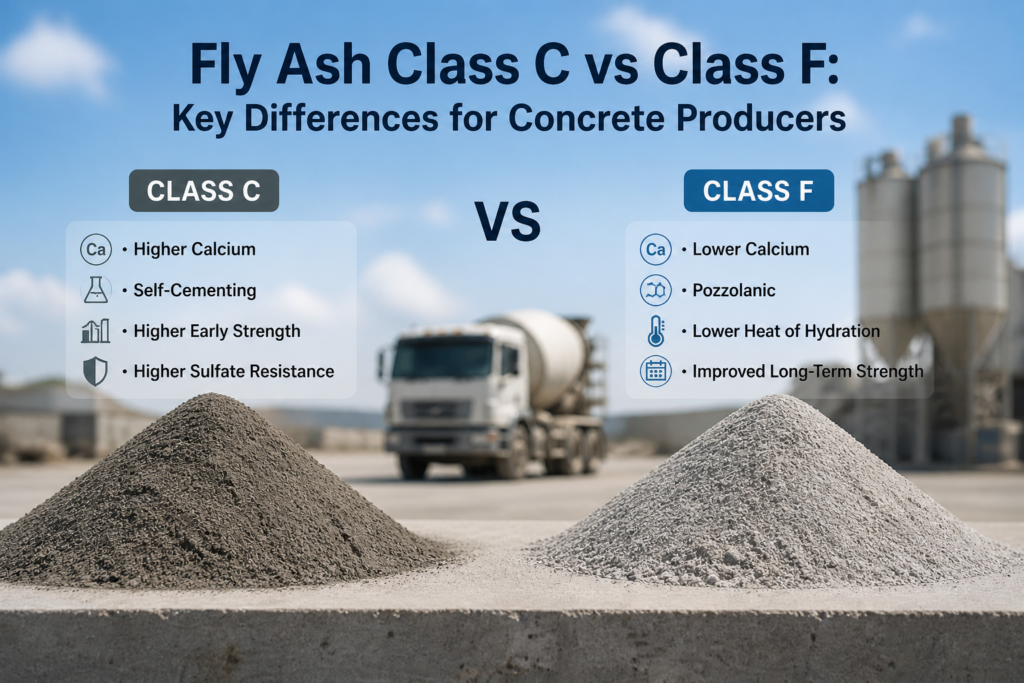
Fly Ash Class C vs Class F: Key Differences | Miningsun

Class C and Class F fly ash are both governed by ASTM C618 but they differ fundamentally in chemistry, strength development, sulfate resistance, and ASR mitigation performance. Class F fly ash, produced from bituminous coal, has low calcium content and is the standard export grade for most international concrete projects. Class C fly ash, from sub-bituminous coal, has self-cementing properties but can reduce sulfate resistance in aggressive environments. This guide compares the two classes across every parameter that matters for concrete specification — including a sulfate exposure warning that procurement teams must understand before substituting one class for the other.

Fly Ash Class C vs Class F: Key Differences | Miningsun Read More »

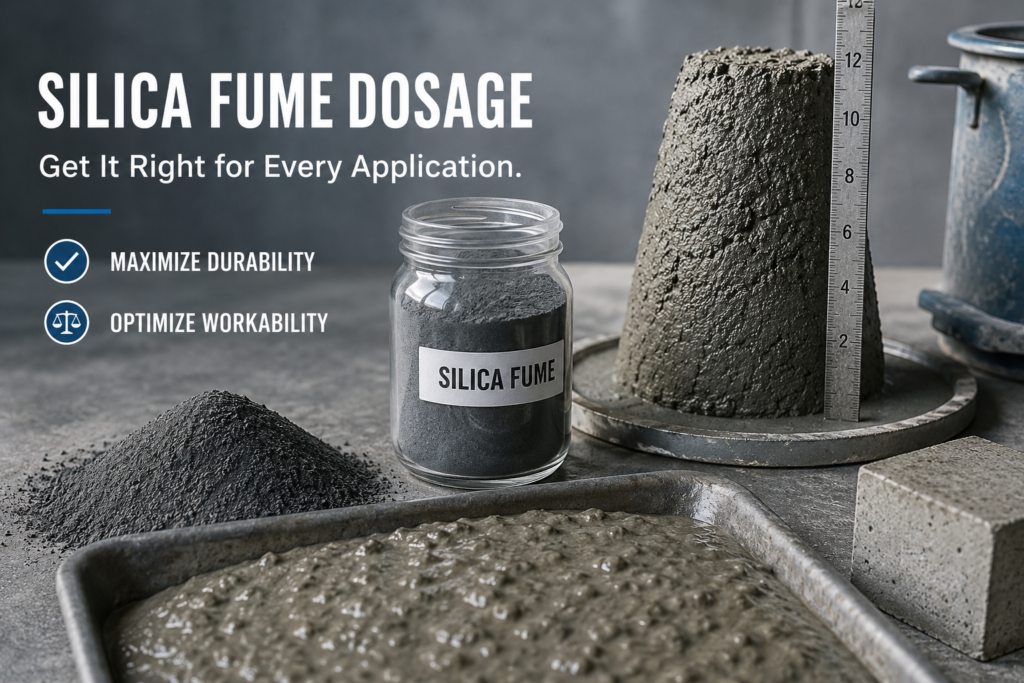
Silica Fume Dosage: How Much to Use in Concrete | Miningsun

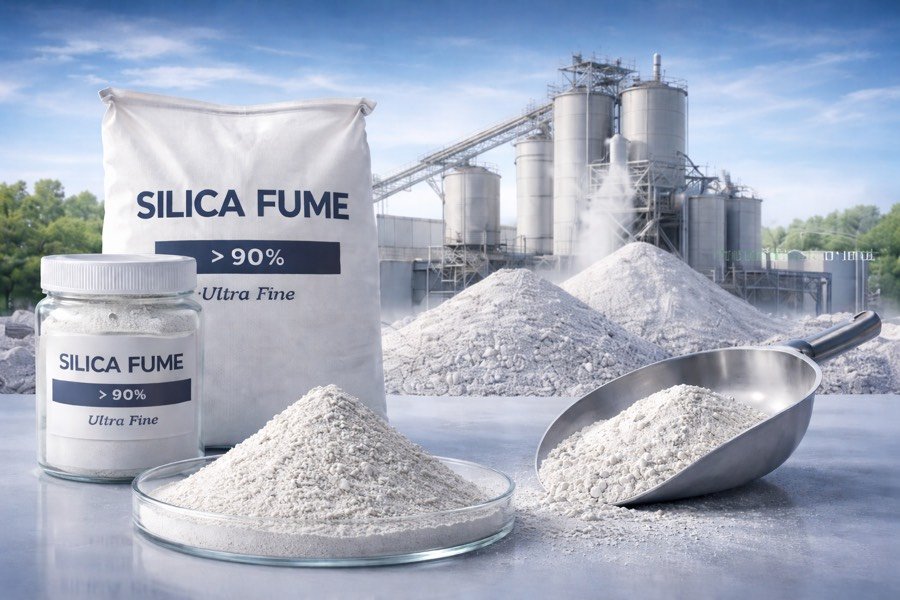
Silica fume dosage varies significantly by application — from 5–8% for standard high-performance concrete to 15–25% for UHPC. Getting the dosage wrong means either leaving durability gains on the table or collapsing workability on site. This guide covers the correct dosage range for HPC, marine structures, bridge decks, shotcrete, precast, and oilwell cementing, with a complete mix design checklist covering water-to-binder ratio, superplasticizer selection, and curing requirements. A practical reference for concrete producers and procurement teams sourcing silica fume internationally under ASTM C1240 or EN 13263.

Silica Fume Dosage: How Much to Use in Concrete | Miningsun Read More »

Silica Fume vs Fly Ash: Which SCM Should You Use in Concrete?

Silica fume and fly ash are both pozzolanic SCMs but they solve different problems in concrete. Silica fume delivers rapid strength gain and extreme permeability reduction — RCPT values below 500 coulombs at 8–10% dosage. Fly ash improves workability, reduces heat of hydration, and cuts cost at 20–35% replacement, but gains strength slowly and is less effective at chloride resistance. This guide compares both materials across strength development, permeability, workability, water demand, dosage, cost, and sulfate resistance — including a section on ternary blends where both materials are used together for optimal performance. Governed by ASTM C1240 and ASTM C618 respectively.

Silica Fume vs Fly Ash: Which SCM Should You Use in Concrete? Read More »

Densified vs Undensified Silica Fume: A Complete Handling and Application Guide

Densified and undensified silica fume are chemically identical but behave very differently in handling, shipping, and concrete mixing. The choice between the two grades affects freight cost per container, workability in the mixer, dust control at the batching plant, and suitability for UHPC formulations. Densified silica fume, at 500–700 kg/m³ bulk density, loads twice as much payload per 20-foot container as undensified material and integrates easily into automated pneumatic batching systems — making it the default choice for international buyers in Europe, the Middle East, and the Americas. Undensified silica fume, at 200–350 kg/m³, is preferred for ultra-high-performance concrete and oilwell cementing where full dispersion at low water-to-binder ratios is critical. Both grades comply with ASTM C1240 and EN 13263. This guide covers bulk density, shipping economics, plant handling, concrete performance, dosage, and a decision framework for procurement teams sourcing microsilica internationally.

Densified vs Undensified Silica Fume: A Complete Handling and Application Guide Read More »

Scroll to Top